
NanoPi NEO Core CPU Board LTS




NanoPi NEO Core CPU Board LTS
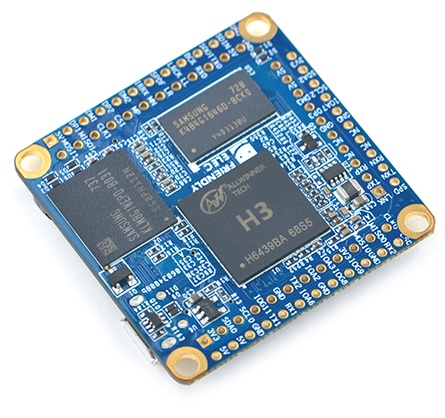
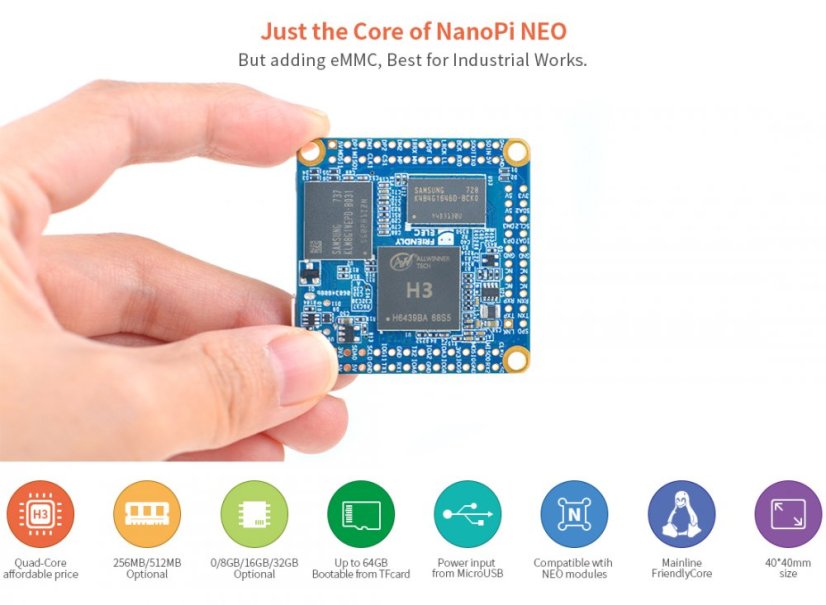
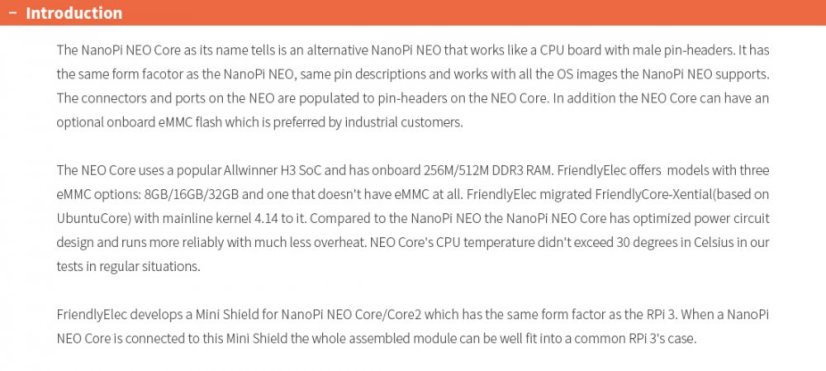
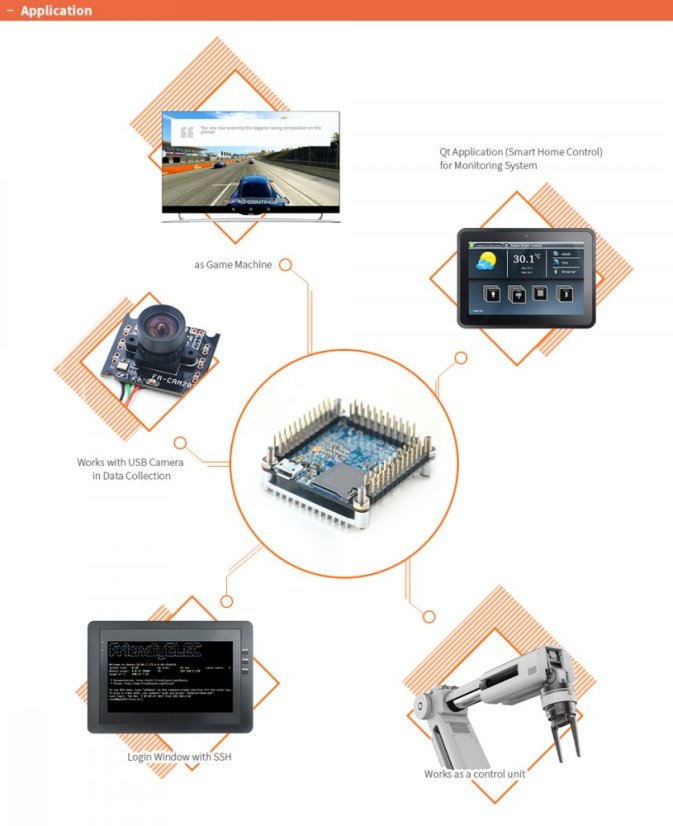
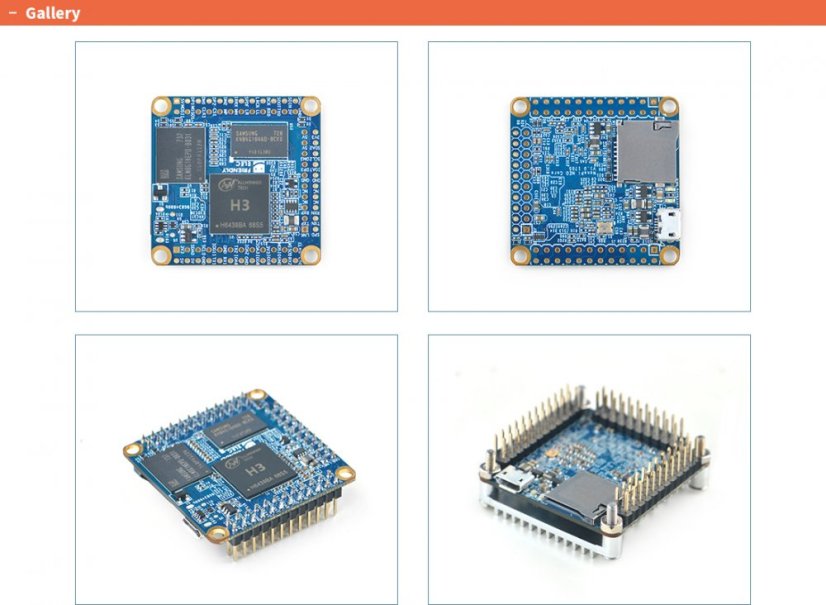
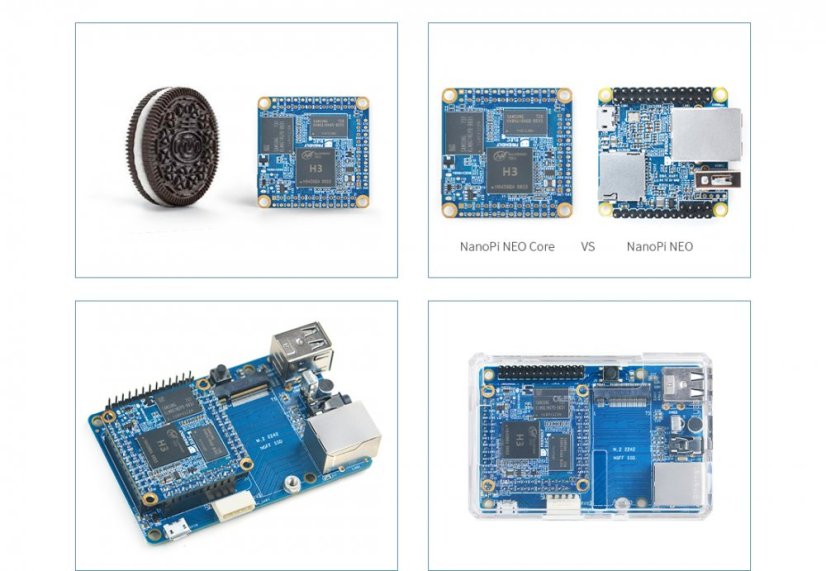
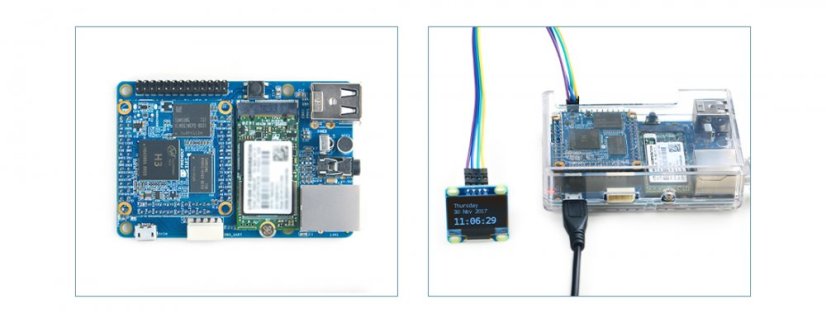
The NanoPi NEO Core (shortened as "NEO Core") is an alternative to the NanoPi NEO, functioning as a CPU board with plug-in connectors. It has the same design as the NanoPi NEO and identical pin descriptions. The connectors and ports are fully populated for the NEO Core. The NanoPi NEO Core features ESD protection for the microUSB port and a TF card slot. Moreover, it can have optional integrated eMMC flash, which is preferred by industrial customers.
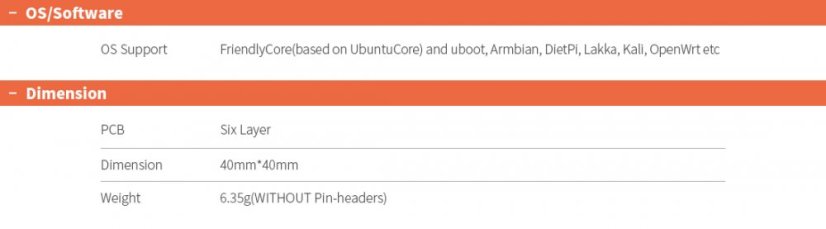
The NEO Core utilizes the popular Allwinner H3 SoC and is equipped with 256MB/512MB DDR3 RAM. FriendlyElec offers models with three eMMC options: 8GB/16GB/32GB and one model that does not have eMMC.
FriendlyElec has ported UbuntuCore with the main kernel 4.x.y.
FriendlyElec is developing a mini case for the NanoPi NEO Core/Core2, compatible with the RPi 3 format. When the NanoPi NEO Core is inserted into this mini case, the entire assembled module fits well into a standard RPi 3 case.
Specifications:
- Model: NanoPi NEO Core
- CPU: Allwinner H3, Quad-core Cortex-A7 up to 1.2GHz
- DDR3 RAM: 256MB/512MB DDR3 RAM
- Storage: NC/8GB/16GB/32GB eMMC
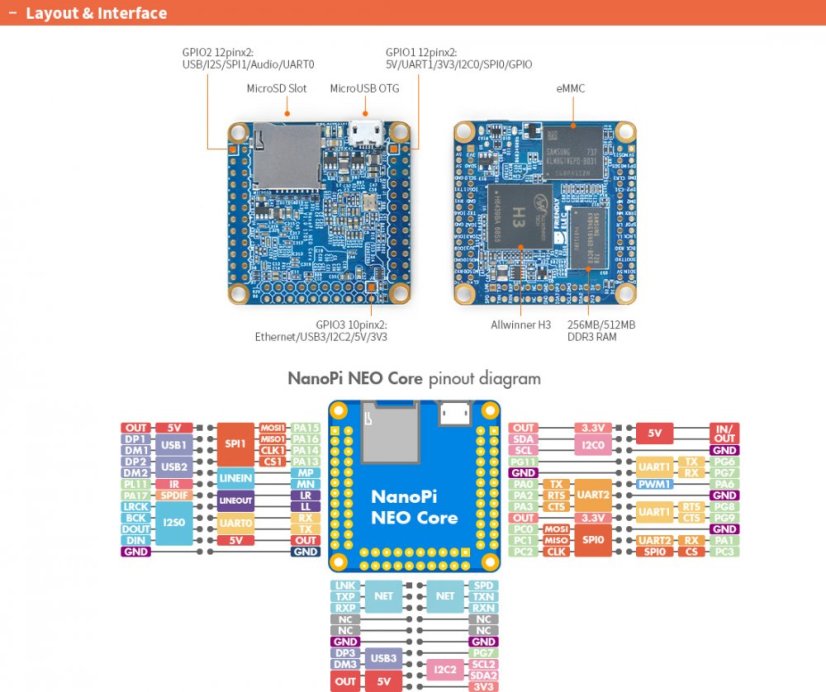
- MicroSD Slot x 1
- MicroUSB: OTG and power
- GPIO: two 2.54mm spacing 12x2pin headers, one 2.54mm spacing 10x2pin header
- Connection: 10/100M Ethernet (6Pin, includes 2.54mm pitch pin header)
- USB Host x3 (includes 2.54mm pitch pin header)
- Debug Serial Port (4Pin, includes 2.54mm pitch pin header)
- Audio input/output Port (4Pin, includes 2.54mm pitch pin header)
- GPIO: Includes UART, SPI, I2C, IO, etc.
- Board Size: 40 x 40mm
- Power Supply: DC 5V/2A
- Temperature Range: -40℃ to 80℃
- OS/Software: U-boot, Ubuntu-Core
- Weight: xxg (WITHOUT pin headers)
Package Contents:
1x NanoPi NEO Core
2x Pin headers
These open-source boards are supplied without a manual and support. Everything you need can be found on the FriendlyARM wiki page.
Related Resources
Wiki: http://wiki.friendlyarm.com/wiki/index.php/NanoPi_NEO_Core


 Austria
 Belgium
 Bulgaria
 Croatia
 Estonia
 Finland
 France
 Greece
 Hungary
 Italy
Italy Latvia
 Lithuania
 Netherlands
 Poland
 Portugal
 Romania
 Slovenia
 Spain
Spain Sweden